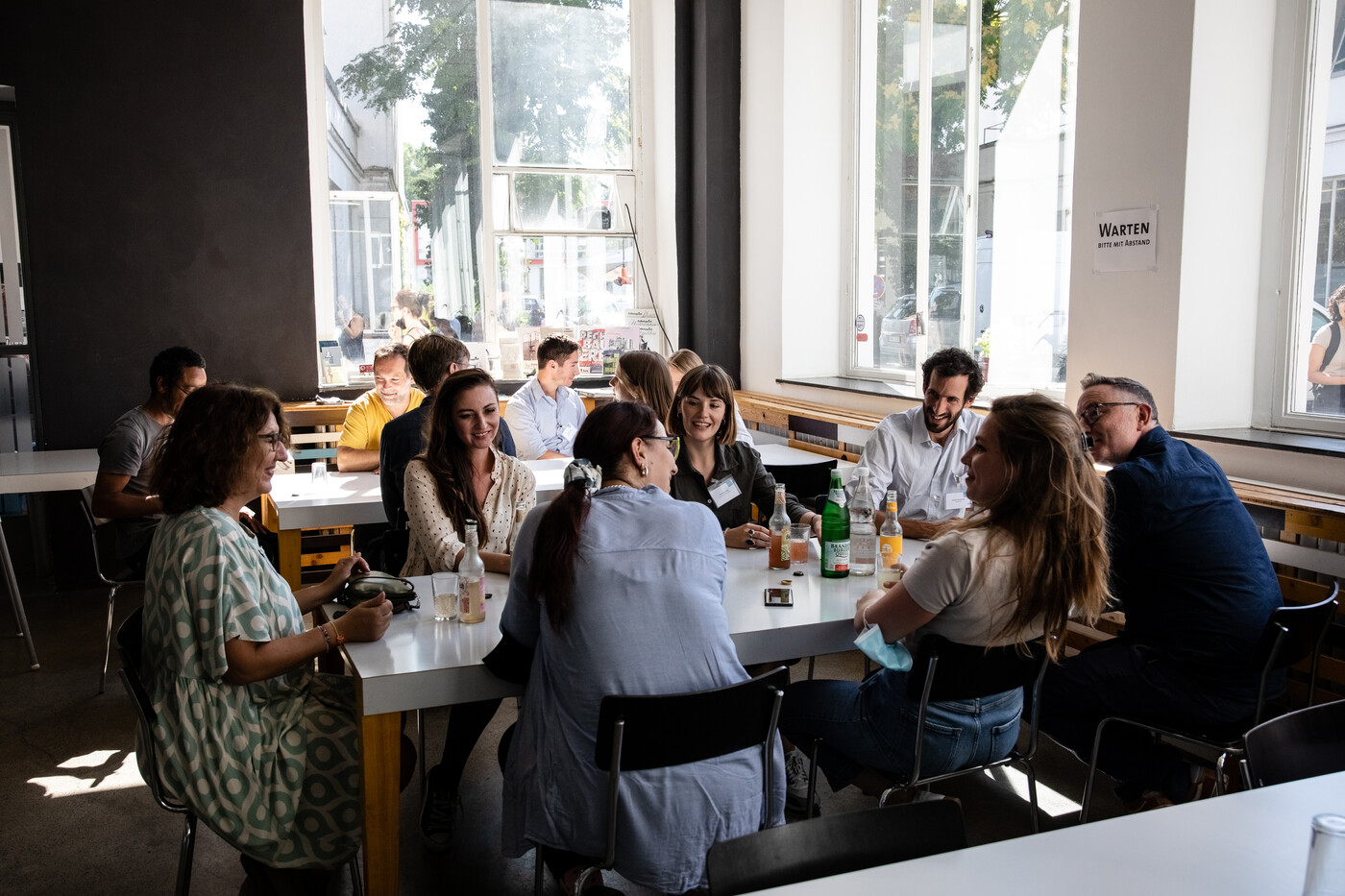
For the third time in three years, the Media and Migration in Europe network convened at the community-owned ExRotaprint venue in one of the most diverse districts of Berlin. The 14 representatives of media outlets, research institutes, media support organisations and NGOs from nine European countries came to discuss media coverage on migration and minorities.
The meeting was organised by MEDIENDIENST INTEGRATION as coordinator of the "Media and Migration in Europe"-network (MME), an informal community bringing together nearly 80 members across 19 countries.
Over the last few months, the discourse on migration and minorities has been affected by major geopolitical events: the Covid-19 pandemic, the Taliban's rise to power in Afghanistan and a sudden increase in the number of asylum seekers entering Europe through Belarus.
Whenever unprecedented situations like these occur, media need to be well-equipped to cover them. As an expert network, the #MME has the know-how to support media in doing a better job in covering migration: it can provide up-to-date information, link journalists to practitioners and researchers in the field as well as share best practices of fact-based coverage.
"When it comes to improving migration journalism, we need to be prepared to step in when the debate turns toxic and is lacking context", says Rob McNeil of the Migration Observatory at Oxford University. Recent international events showed what such support could look like: A representative from Lithuania-based Diversity Development Group shared their concerns about the negative public debate on refugees entering the country via Belarus. The MME helped coordinate a rapid reaction team between local partners and international experts. The team has since set up a briefing for Lithuanian journalists and planned other activities towards a more nuanced and fact-based media coverage.
Participating projects and organisations:
-
Migration Observatory (Oxford University), UK
-
People in Need, Czech Republic
-
Community Media Forum Europe, Belgium (cross-European project)
-
Diversity Development Group, Lithuania
-
Fundación Al Fanar, Spain
-
Solomon, Greece
-
Media Diversity Institute, UK (cross-European project)
-
Migration Policy Group, Belgium
-
Centrum Edukacji Obywatelskiej (CEO), Poland
-
Guiti News, France
-
Thomson Foundation, UK and Germany
By Martha Otwinowski